Understanding CSPNet: Enhanced Efficiency Without Compromise
Introduction to Cross-Stage Partial Networks
In the quest for more efficient deep neural networks, researchers have continuously sought architectures that deliver high accuracy without proportional increases in computational cost. The Cross-Stage Partial Network (CSPNet), introduced in the paper CSPNet: A New Backbone that Can Enhance Learning Capability of CNN, offers a compelling solution: it improves both speed and accuracy by fundamentally rethinking how feature maps are processed across network stages. Unlike previous approaches that often trade off one metric for another, CSPNet demonstrates that it is possible to achieve better performance with no tradeoffs.

The Core Idea: Reducing Redundant Gradient Computation
Traditional convolutional neural networks (CNNs) suffer from a well-known inefficiency: during backpropagation, gradients flowing through early stages often contain highly redundant information. This redundancy not only slows down training but also leads to suboptimal parameter updates. CSPNet addresses this by partitioning the feature maps within each stage into two parts. One part is processed through conventional convolutional layers, while the other part bypasses those layers and is concatenated later. This simple yet powerful modification drastically reduces the amount of redundant gradient computation without losing critical information.
How CSPNet Works Step by Step
Let’s break down the mechanism of a typical CSPNet block:
- Input Partitioning: The input feature map of a stage is split into two halves along the channel dimension. For example, if the input has 256 channels, each partition receives 128 channels.
- Partial Processing: Only the first partition goes through a series of convolutional layers (e.g., a small residual block). The second partition remains untouched and is directly passed forward.
- Merging with Transition: After processing the first partition, the output is concatenated with the unprocessed second partition. This combined feature map then goes through a transition layer (typically a 1x1 convolution) to adjust channel dimensions before entering the next stage.
- Gradient Flow Optimization: During backpropagation, the gradient paths for the two partitions are distinct. The bypassed partition ensures that gradients for early layers are not diluted by redundant copies, leading to more efficient learning.
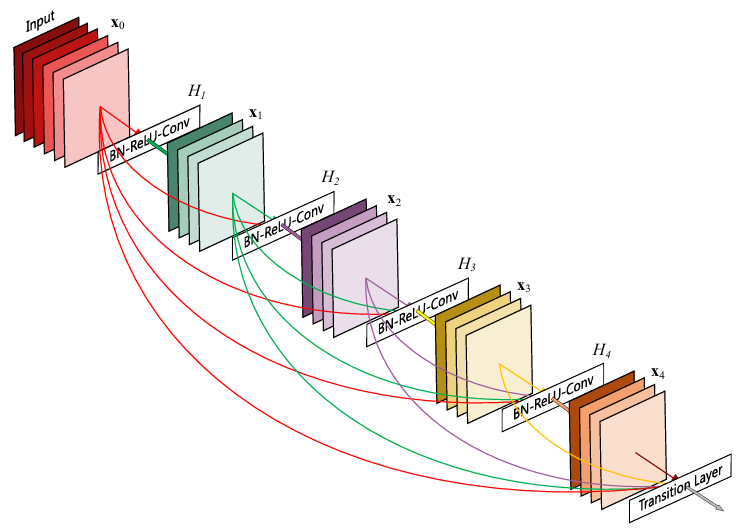
This design can be applied to various backbone architectures, such as ResNet and DenseNet, replacing their standard bottleneck blocks with CSPNet blocks. The resulting network, often called CSPNet or CSPDarknet in the context of object detection, achieves state-of-the-art results with significantly fewer FLOPs.
Benefits Over Traditional Architectures
The advantages of CSPNet are numerous and measurable:
- Higher Accuracy: By reducing gradient redundancy, the network can focus on learning more discriminative features. On ImageNet, CSPResNet outperforms standard ResNet at similar computational budgets.
- Reduced Computation: The partial processing strategy cuts the number of parameters and floating-point operations (FLOPs) by roughly half in the early stages. This makes CSPNet ideal for edge deployment.
- No Accuracy Tradeoff: Unlike pruning or quantization, which often cause accuracy drops, CSPNet maintains or even improves accuracy while lowering cost.
- Seamless Integration: CSPNet works as a drop-in replacement for existing CNN backbones in tasks like classification, detection, and segmentation. Notably, it became the backbone of YOLOv4, one of the fastest and most accurate real-time detectors.
Comparison with Other Efficiency Techniques
Many approaches, such as depthwise separable convolutions and network pruning, aim for efficiency but often introduce new complexities. CSPNet, in contrast, is a structural modification that is easy to implement and compatible with other optimizations like batch normalization and skip connections. It also complements attention mechanisms, as seen in later hybrids like CSP-Transformer.
Practical Implementation Insights
Implementing CSPNet from scratch in PyTorch is straightforward. A typical CSP block requires:
- A split function to divide channels into two groups.
- A residual or dense sub-block applied to the first group.
- A concatenation layer to merge both groups.
- A final transition convolution to unify dimensions.
For researchers and practitioners, open-source implementations (e.g., in Ultralytics YOLO repositories) provide ready-to-use CSPDarknet backbones. The paper’s official code is also available on GitHub, offering a baseline for custom experiments.
Conclusion: Why CSPNet Matters
The Cross-Stage Partial Network represents a shift in how we think about stage-level information flow in CNNs. By acknowledging and actively reducing gradient redundancy, CSPNet achieves a rare feat: better performance with fewer resources. Its impact is visible in production systems, from real-time object detection to mobile vision tasks. As deep learning moves towards edge deployment, architectures like CSPNet will become increasingly vital. Whether you are a researcher seeking new design principles or an engineer deploying efficient models, understanding CSPNet is a valuable step forward.